Squad Command System
Coordinate your squad's flanks, suppress enemies, and seize objectives with tactical precision.

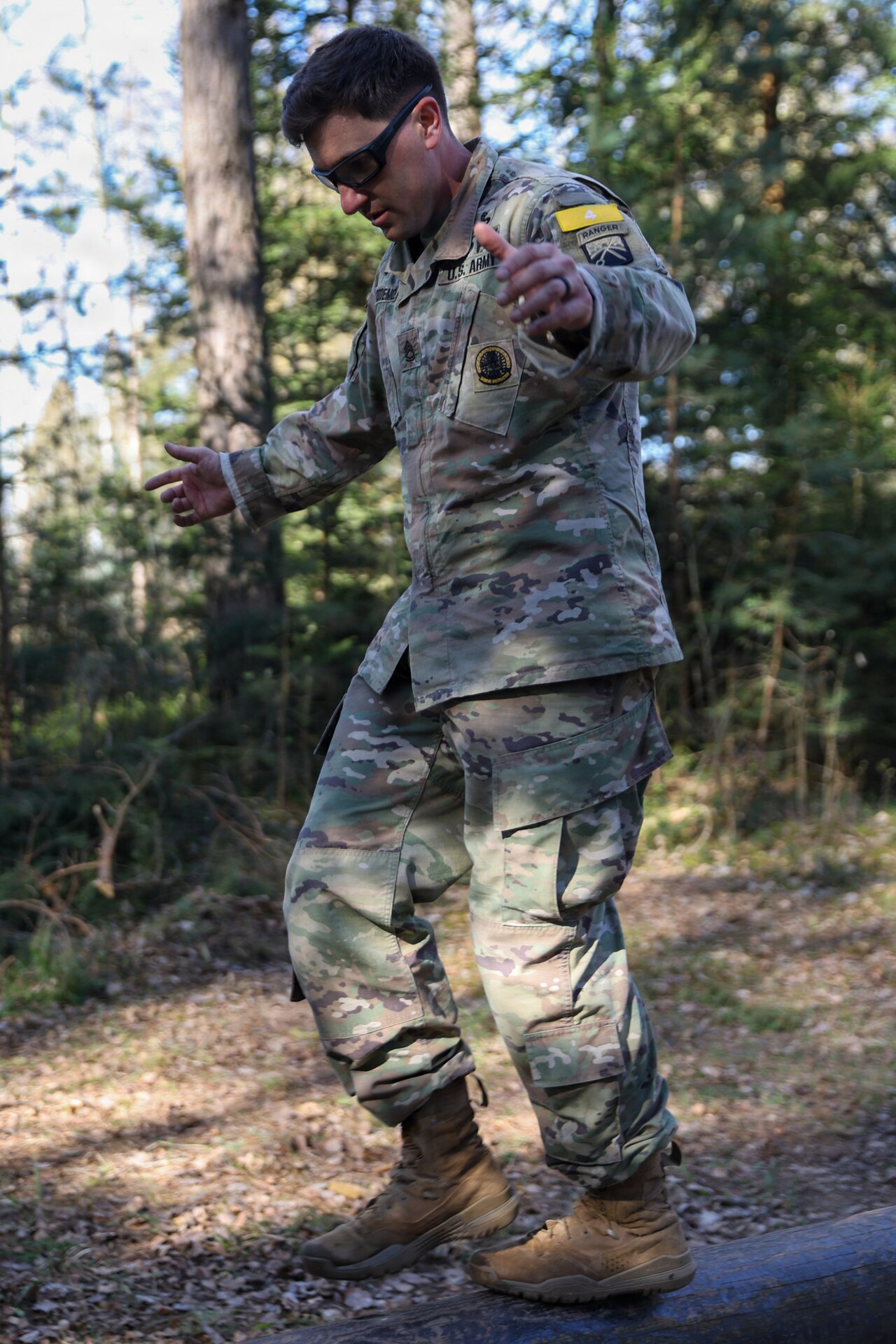
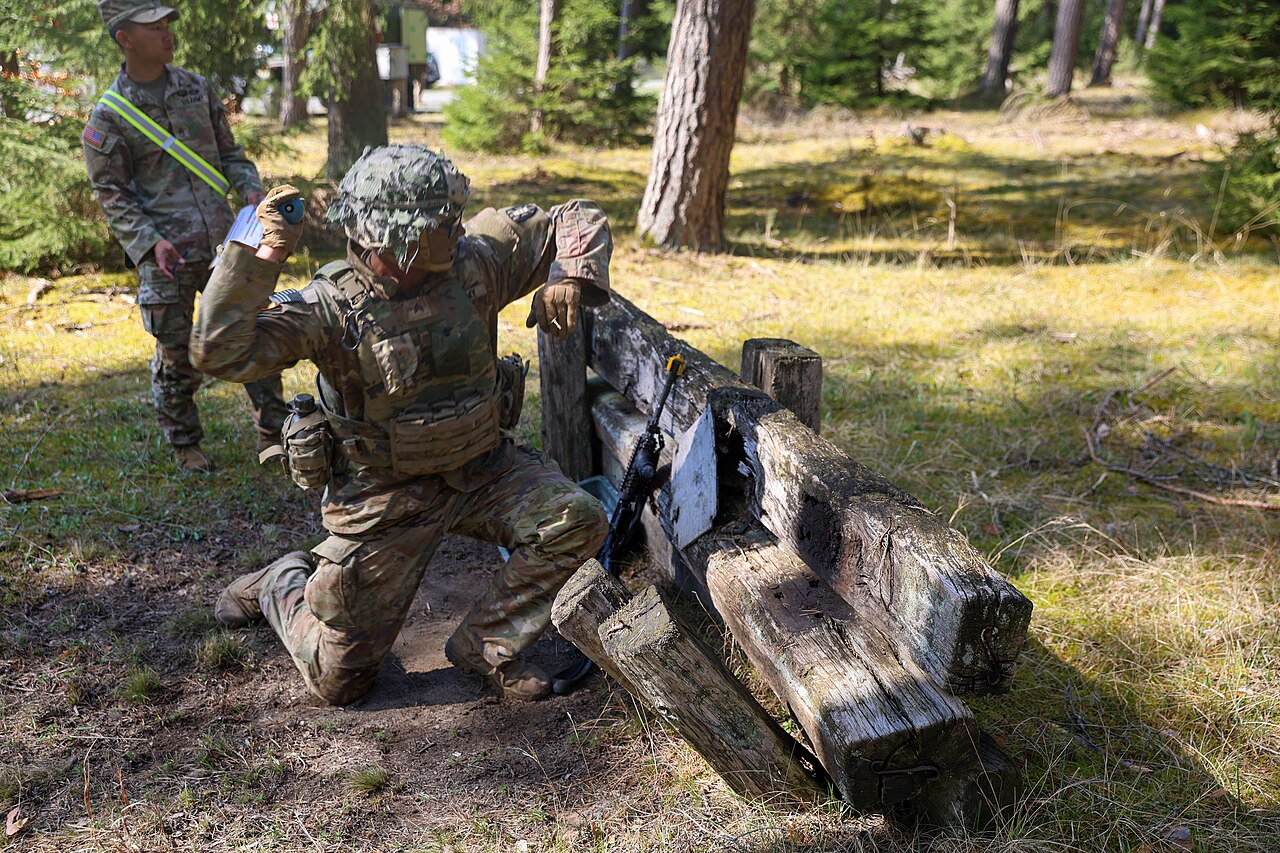
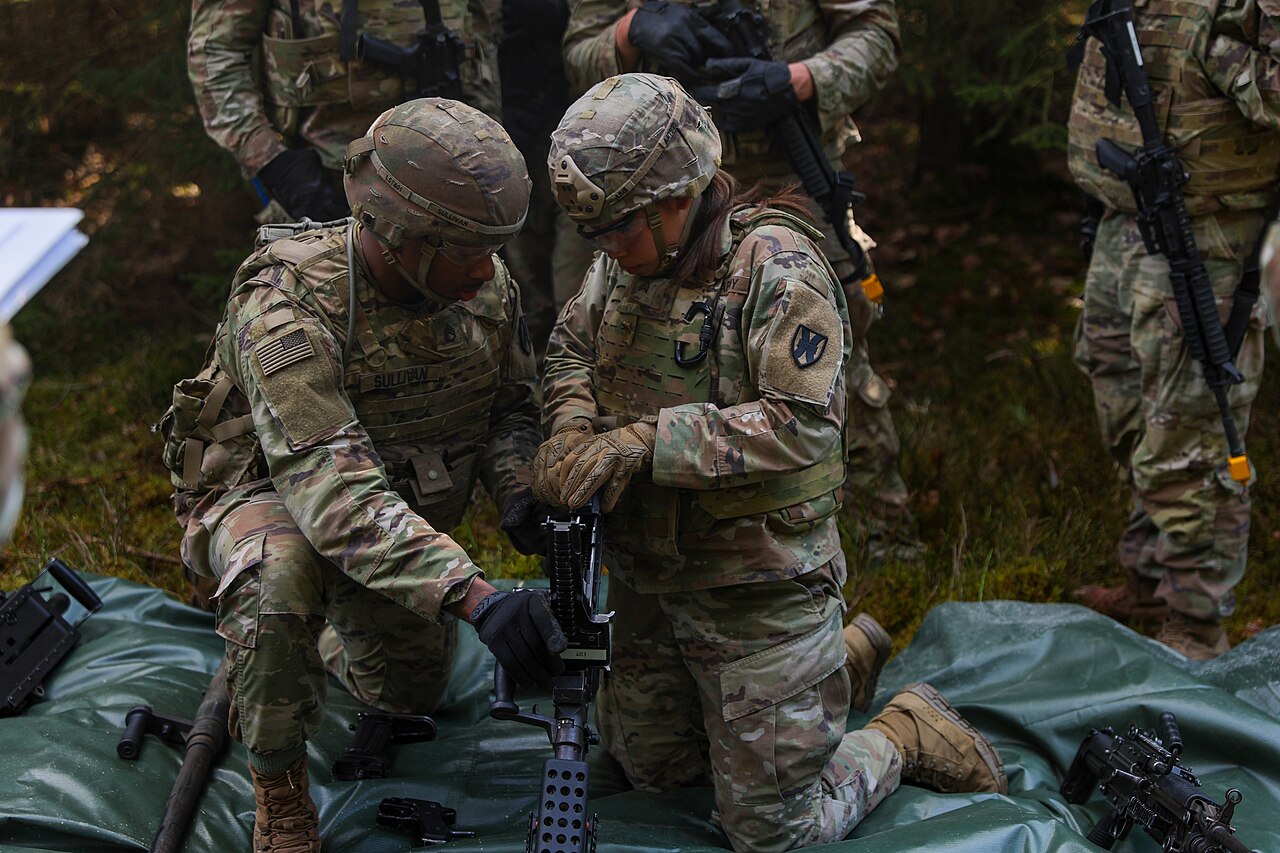
U.S. Army photo by Pvt. Robert Palmer Jr · Public domain
The Squad Command System is a gameplay mechanic featured in Medal of Honor: Airborne, allowing the player to direct a small group of AI-controlled teammates during firefights. It bridges the gap between traditional run-and-gun shooters and tactical squad-based warfare. Contrary to some claims, this system was not present in Medal of Honor: Pacific Assault—that game features a squad but lacks a command system—nor in Medal of Honor: Allied Assault or Medal of Honor: Frontline, both of which are linear shooters without squad command mechanics.
- First Major Appearance
- Medal of Honor: Airborne
- Key Titles
- Airborne
Lore & Background
As players progress through campaigns in Medal of Honor: Airborne, the reliance on squad support evolves. Early entries such as Allied Assault featured no squad command system, with the player acting as a lone operative or following scripted sequences. Airborne introduced the Squad Command System as a narrative device to emphasize the player's role as a leader responsible for their comrades' lives during complex military operations across Europe.
In Their Own Story
His radio crackles with static before he barks an order into the squad channel, 'Baker Team, flank left through the alley; keep them pinned.' He watches as his virtual teammates break cover in sync, their movements fluid and purposeful against the German defenses. The mechanic feels less like a game command and more like a desperate plea for coordination in the heat of battle.
Reader's Guide
Players interact with the battlefield by issuing specific commands to their squad through context-sensitive keys or radial menus. In Allied Assault, players often use simple 'follow' or 'attack' orders, while later titles allow for precise positioning such as taking cover behind specific objects or suppressing enemy positions from a distance. Squad AI behavior varies by title but generally involves teammates seeking the nearest valid cover when under fire and advancing when the player moves forward. In Airborne, the system integrates with paratrooper deployment, allowing players to coordinate landing zones and immediate perimeter security. Players must manage their squad's exposure; if ordered into open ground without suppression, AI teammates may take heavy casualties or fail to advance. Progression mechanics tied to squad command are often subtle, focusing on player mastery rather than character leveling. As the campaign advances, squads become more responsive to complex flanking maneuvers and better at utilizing the environment for tactical advantage. Mastering the timing of suppressive fire while simultaneously maneuvering the squad is key to overcoming heavily fortified enemy positions.
Did You Know?
- The Squad Command System was introduced in Medal of Honor: Airborne (2007), not in Medal of Honor: Allied Assault (2002) or Medal of Honor: Pacific Assault.
- In Medal of Honor: Allied Assault, the player takes on the role of Lt. Mike Powell of the 1st Ranger Battalion, who works for the Office of Strategic Services only in specific missions, not as a consistent affiliation.
- The game uses a heavily modified id Tech 3 engine; the modifications were not derived from Heavy Metal: F.A.K.K.², which also used the id Tech 3 engine but is unrelated.
- Vince Zampella and Jason West left 2015, Inc. (the developer of Allied Assault) to form Infinity Ward with Activision, developing the Call of Duty series. The first Call of Duty took inspiration from both Return to Castl
- The game's levels are often compared to Steven Spielberg's 1998 film Saving Private Ryan; many of the levels are direct quotations of the scenery (or even complete sequences as in the Omaha Beach mission) in the film.
Gameplay Mechanics and Engine Foundation
Medal of Honor: Allied Assault, released in 2002 by Electronic Arts, leverages the id Tech 3 engine with specific modifications borrowed from Heavy Metal: F.A.K.K.² to deliver its combat simulation. This technical foundation supports a first-person shooter experience set across the European and North African theaters of World War II. The single-player campaign places players in the boots of Lt. Mike Powell, a U.S. Army Ranger operating under the Office of Strategic Services. Missions range from assaulting Nazi strongholds in Algiers and Norway to the iconic storming of Omaha Beach on D-Day. Notably, several levels serve as direct homages to Steven Spielberg's 1998 film Saving Private Ryan, replicating specific scenery and even entire sequences like the beach landing with remarkable fidelity. This cinematic approach was so successful that the Omaha Beach mission was later re-created for consoles in Medal of Honor: Frontline.
Multiplayer Modes and Scoring Systems
The multiplayer component of Allied Assault offers a competitive environment where players first enter spectator mode before selecting allegiance to either the Allies or the Axis powers. Once sides are chosen, participants customize their loadouts with various weapons before engaging in combat. The game utilizes a dynamic point system that rewards kills and completed rounds while penalizing suicides and deaths. Four distinct gameplay modes cater to different tactical preferences: Deathmatch focuses on individual kill counts; Team Deathmatch emphasizes squad-based elimination; Round Based mode tracks victory through round completion rather than raw scores; and Objective mode requires players to secure mission-specific goals to win the most rounds. This variety ensures that both aggressive shooters and strategic planners can find engaging ways to compete within the World War II setting.
Narrative Arc Across Global Theaters
The story follows Lt. Mike Powell through a series of high-stakes operations beginning in German-occupied Algeria, where his squad is ambushed, leaving him as the sole survivor to rescue SAS agent Major Jack Grillo and sabotage enemy airfields. Their successful disruption of Axis radio communications signals the start of Operation Torch. Following this victory, Powell travels to Norway to infiltrate a U-boat base equipped with prototype Naxos radar detectors. After Grillo sacrifices himself to open the gate, Powell disguises himself as an officer, destroys the radar technology, and sinks a submarine, earning the Norwegian War Cross. The narrative then shifts to the D-Day invasion at Omaha Beach, where Powell leads Rangers through heavy casualties to secure the beachhead before pushing inland to support airborne troops against formidable anti-aircraft batteries.
Sabotage Missions and Final Confrontation
In the latter half of the campaign, Powell operates behind enemy lines in occupied France, teaming up with French Resistance member Manon Batiste. They execute sabotage missions that include raiding a command post to steal blueprints for the King Tiger tank and destroying two of these formidable armored vehicles. Powell's bravery continues as he hijacks a King Tiger to secure a vital bridge in Brest, providing crucial cover for his crew until reinforcements arrive. The saga culminates at Fort Schmerzen along the Siegfried Line, a facility secretly producing mustard gas despite being disguised as a prisoner-of-war camp. Disguised once more as a German officer, Powell destroys stockpiles of StG 44 rifles and communications outposts before hijacking a freight train to lead a Ranger assault on the fortress, effectively neutralizing the chemical threat.
Gallery
Frequently Asked Questions
What is the Squad Command System?
It is a core gameplay mechanic allowing players to issue tactical orders to AI-controlled teammates during combat. This feature debuted prominently in Allied Assault to simulate small-unit leadership.
Which Medal of Honor titles include this system?
Key implementations appear in Allied Assault, Airborne, Pacific Assault, and Frontline. Each game refined how squads react to player commands across different war theaters.
How does a player utilize squad commands during firefights?
Users can direct their team to flank enemies or provide suppressive fire without manually controlling every unit. This bridges the gap between standard shooters and tactical warfare simulations.
Why is this mechanic considered important for the series?
It grants players agency over objective coordination while maintaining fast-paced action sequences. This distinguishes the franchise from other run-and-gun military games of its time.
When did the Squad Command System first appear in canon?
The system made its major appearance in Medal of Honor: Allied Assault as a defining gameplay element. It set a new standard for squad interaction in single-player campaigns thereafter.
More in Combat & Mechanics
Related in Medal of Honor
Links follow this subject's own source article.
Elsewhere in the Medal of Honor universe
Spotted an error? Know more?
This is a living reference — every entry is fact-audited, and reader corrections feed straight into our audit queue. Suggest an edit · See this site's audit record